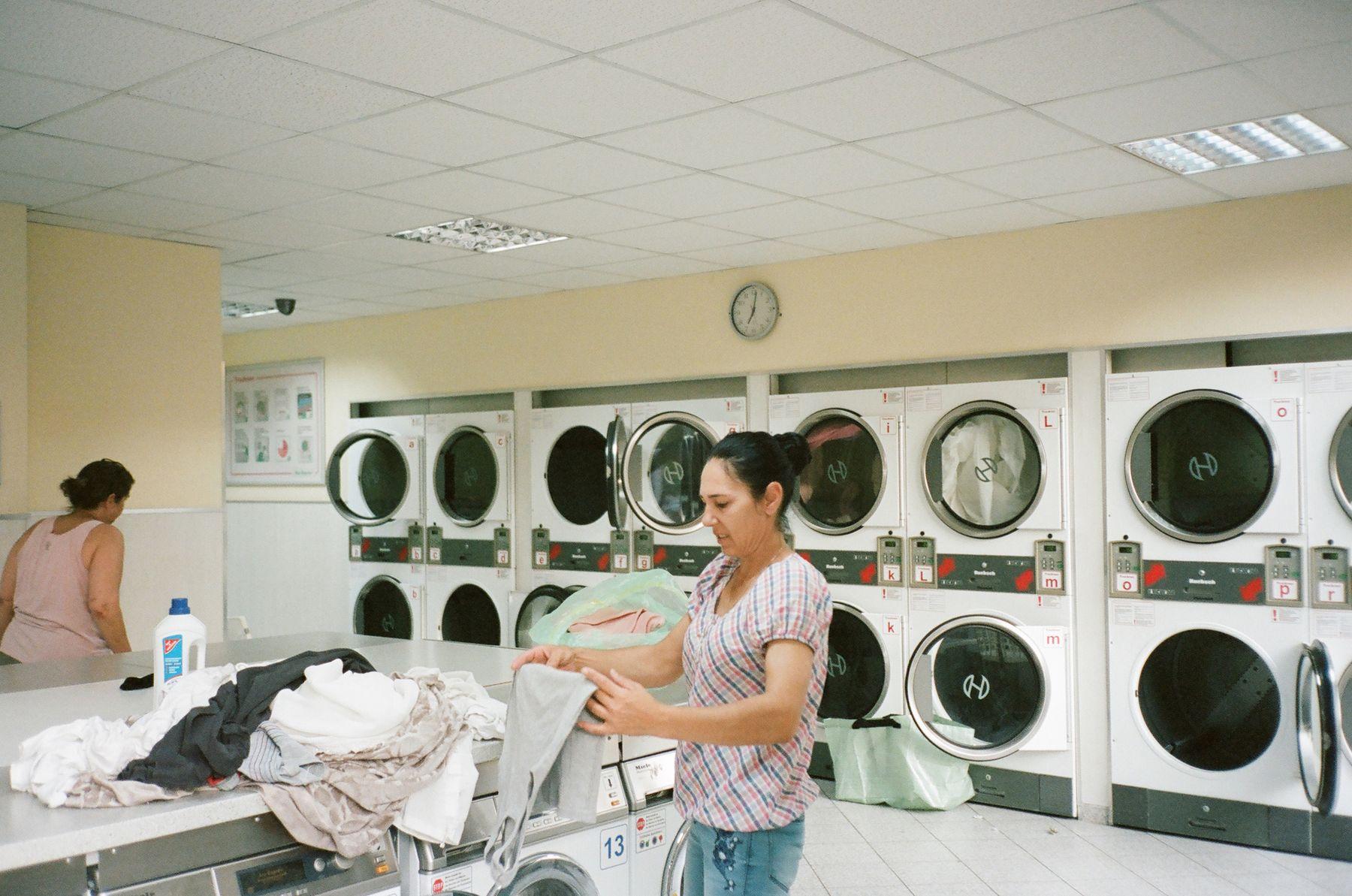
A customer arrives with two shirts, a duvet and a bag of everyday clothes. Your sign says “R36 per kilogram”. She sees one order; your team sees three different jobs. If you put everything on the scale together, the quote looks simple until the sorting, separate cycles and ironing consume the afternoon.
A useful laundry price list tells customers what is included, how a small order is charged, which items need their own price, and what collection costs. For a South African wash-and-fold service, a per-kilogram rate can work for ordinary mixed laundry, but pair it with a visible minimum charge. Price bulky items, ironing and special treatment separately after checking the work. Build those figures from your own costs before copying a competitor’s sign.
South African consumer and VAT source pages checked on 17 November 2026. Every rand figure below is an illustrative example, not a market rate or recommended price.
Why “R36/kg” can lose money on a 2 kg bag
Imagine a neighbourhood laundry in Pretoria charging R36/kg for standard wash, dry and fold. A 5 kg bag brings in R180. Suppose its job-level costs are R33 for the cycle, water, electricity and detergent; R55 for sorting and folding labour; and R10 for packaging and payment. That is R98 in costs that arise from doing this job, leaving R82 contribution towards rent, equipment upkeep, administration and profit.
A 2 kg bag would bring in only R72 at the same rate. Yet it may still need a cycle, intake, a separate order label and a handover. Suppose its direct costs total R80. The business loses R8 before overhead. The lower weight has not made every step two-fifths as expensive.
An example rule is R36/kg, minimum R120 per order. The 2 kg customer pays R120 and the 5 kg customer pays R180. The small job now leaves R40 contribution on the assumed costs. Put the minimum next to the per-kilogram rate wherever customers see it. “R36/kg” in large type with a surprise R120 minimum at checkout makes a poor second-visit strategy.
| Standard wash, dry and fold | 2 kg bag | 5 kg bag |
|---|---|---|
| Price at R36/kg with R120 minimum | R120 | R180 |
| Illustrative job-level costs | R80 | R98 |
| Contribution before overhead | R40 | R82 |
These numbers assume one ordinary load and no unusual treatment. If your staff must run darks and whites separately, your cost changes. Record the jobs you actually process for a fortnight: dry weight at intake, number of cycles, staff minutes, products used, packaging and payment fees. Replace the example costs with your own median and your awkward small-order cases. The markup-versus-margin guide explains why the rand amount left after a job is different from a percentage markup.
Which laundry items should have their own line?
Per-kilogram pricing is easiest for ordinary garments that can travel through the same process. It becomes misleading when one item needs most of a drum, a special programme or substantial hand work. A duvet, heavy blanket, formal shirt requiring ironing and delicate garment should not silently inherit the ordinary bag rate.
You do not need a forty-line menu. Start with a few service groups:
| Price-list line | What the customer needs to know |
|---|---|
| Standard wash, dry and fold | Rand per dry kilogram, minimum charge and what can be mixed in one load |
| Bedding or bulky item | Price per item or size, subject to the care label and machine capacity |
| Ironing | Per item or a clearly defined bundle; whether washing is included |
| Special treatment | Quote after inspection; get approval before charging for extra work |
| Collection and return | Service area, fee or order threshold, and whether one or both trips are included |
If a care label rules out your normal process, tell the customer before accepting the job. Record pre-existing stains or damage at intake and what result you can reasonably attempt. A promised “stain removal” price is not a promise that every stain will disappear. Your counter receipt or digital confirmation should show the agreed service, item count or weight, price and expected collection time.
Is free laundry collection really free?
Collection can make a laundry service easier to use, especially for a household with weekly loads or a guesthouse sending linen. It also turns a small order into a transport job. Say an efficient pickup-and-return route costs R120 in driver time, fuel and vehicle use and serves four orders. That is R30 per order. The 5 kg example’s R82 contribution falls to R52 if you absorb the route cost; the 2 kg minimum order’s R40 falls to R10.
If only one customer books that route, it costs R120 for that order. “Free collection on all orders” would turn both examples negative before rent. Set a zone, collection days, a delivery fee or a minimum order based on the routes you can actually fill. Show whether the fee covers pickup, return or both. Our delivery-cost guide uses the same principle for parcels: count the whole journey, not only the headline charge. Laundry has the extra complication of two journeys and time windows.
What should the customer-facing price list say?
Here is a short illustrative format, with amounts that a real operator must recalculate:
Wash, dry and fold: R36 per dry kilogram; minimum R120 per order. Ordinary machine-washable clothing only. Bedding, delicates and ironing quoted separately. We weigh and confirm the order at intake. Collection and return within our listed zone: R40, or included on eligible orders of R250 or more. Standard turnaround: two working days after acceptance; we will confirm a new time if an item needs special handling.
The exact price is less important than removing the questions that cause disputes. Define whether a “kilogram” is weighed before or after washing, whether a duvet counts in the bag, what a collection threshold applies to, and when the turnaround clock starts. For a VAT vendor, SARS says advertised or quoted prices must include VAT. The Consumer Protection Act’s plain-language and price provisions also make clarity important; the National Consumer Commission has highlighted the rule against charging more than a displayed price. Check the final board, website and WhatsApp quote against one another before printing.
A price list is also a reason to return
The best repeat order is uneventful. The customer knows what the bag will cost, sees the same terms at pickup and collection, and receives the right clothes at the promised time. Give every order an identifier, count items or bags at handover, confirm unusual handling, and tell the customer promptly if a delay changes the promise. When a regular asks for the same weekly service again, you should be able to recognise the order without making them explain the basics from scratch.
After a month, review the jobs that took longer than their price allowed. Adjust the category, minimum or route rule with evidence. If customers are surprised by the bill, rewrite the sign before buying more advertising. A clear laundry price list protects the margin on difficult jobs and gives a satisfied customer a simple reason to trust the next one.
Cover photograph: Darya Sannikova / Pexels, used under the Pexels License. The image illustrates laundry work; the example business and prices are fictional.