Delivery costs for South African online shops: what to charge and when to offer free shipping
Hydra
Short answer: A South African online shop should set delivery charges from its full cost per order, not a courier’s headline rate. Add the carrier quote, packaging, the cost of getting a parcel to the drop-off or collection point, and a sensible allowance for delivery exceptions. Then choose a checkout method: pass through a live quote, charge a tested flat rate by zone or parcel type, or pay some delivery cost yourself. Offer free delivery above a basket value only when the extra contribution from qualifying orders and the sales it brings justify the subsidy.
Carrier examples and source pages checked on 25 October 2026. Rates and coverage can change. Get a live quote for your parcel and destination before publishing a checkout promise.
Why the advertised courier price is not your delivery cost
A Durban homeware shop might see an attractive rate for sending one small parcel. That rate may apply only to a parcel that fits a particular bag, travels between collection points, or goes to a main centre. A customer who expects delivery to a remote home address is buying a different service.
For each common order type, record:
Full fulfilment cost = carrier charge + packaging + collection/drop-off cost + payment or platform fees caused by the order + an allowance for expected delivery problems.
Keep product cost separate so you can calculate the contribution from the whole order later. Do not add a vague “handling fee” to your calculation twice if your packaging or order fees already cover it. If a staff member makes a special trip to drop off five parcels, allocate the trip cost across those five parcels; if the trip also serves other business errands, use a fair share. Record actual carrier invoices and failed-delivery costs so the allowance can be replaced with your own evidence.
The quoted parcel size matters. Fastway’s weight guide says it rates on the greater of actual and volumetric weight and shows the calculation length × width × height in centimetres ÷ 5,000. A 50 × 30 × 50 cm box weighs 15 kg volumetrically even if the product itself weighs 5 kg. The Courier Guy’s terms also describe charging on the greater of actual and volumetric mass. Use the divisor and rules of the specific service you are quoting; do not assume every carrier or locker product uses Fastway’s formula. Measure the packed box, not the unpacked product.
What do South African delivery options actually include?
These are examples of service types, not a “cheapest courier” ranking. Compare the same parcel, route and destination method before choosing.
| Option | What the customer receives | Merchant check |
|---|---|---|
| Store-to-store or counter-to-counter | A parcel collected from a named outlet | Is the point convenient, and what happens if the customer does not collect? |
| Locker-to-locker | A parcel collected from an available locker | Does the packed item fit the locker, and is a suitable locker available at both ends? |
| Door-to-door economy | Delivery to the stated address | What are the outlying-area, size, collection and failed-attempt rules? |
| Faster door delivery | A shorter service promise where available | Is the speed available on this route and before your dispatch cutoff? |
For a concrete starting point, PAXI’s published store-to-store page listed R59.95 for a standard bag on its 7–9-business-day service and R109.95 for the same bag on its 3–5-business-day service when checked. The standard bag has a 5 kg maximum and size limits. PostNet’s PostNet2PostNet page listed R109 for the first 5 kg, with weight, volumetric and outlying-area qualifications. These services require the buyer to collect from a point. They are not comparable with a door-delivery quote merely because both show a rand amount.
If your shop offers more than one method, name each plainly at checkout: for example, “Collect from selected PAXI point, estimated 7–9 business days” and “Door delivery, rate shown for your address.” Confirm current prices, coverage, prohibited goods, insurance and claim rules directly with the provider. PAXI’s business page also describes pre-registering parcels and store integrations; test the actual booking and tracking flow before relying on it for volume.
How much should you charge the customer?
Use one of three approaches, or combine them by service:
- Live carrier rate: the customer sees a quote based on address and packed parcel details. This limits undercharging if the product data and integration are accurate. Test a bulky cart and an outlying address; a missing weight can make the displayed rate wrong.
- Flat rate by zone or parcel class: simple for the buyer, but your margin absorbs the difference between the rate charged and each actual shipment. Use your own recent orders to find the cost distribution; do not price from the cheapest main-centre parcel alone.
- Subsidised or free delivery: the shop pays some or all of the difference. Make that decision in an order-level contribution calculation, not by calling delivery a marketing expense and ignoring it.
Shopify’s shipping-strategy guidance describes flat, free and carrier-calculated rates and the trade-offs between predictable checkout prices and exposure to changing carrier costs. The logic applies even if your shop uses another platform. Whatever you choose, display the charge and realistic delivery estimate before payment. A parcel tracking link and a clear contact route are part of the service customers experience after checkout.
A worked free-delivery threshold in rand
Suppose a small, non-VAT-registered shop has a R480 basket. Its illustrative order economics are:
| Item | Customer pays R70 delivery | Customer adds R220 and gets free delivery |
|---|---|---|
| Product revenue | R480 | R700 |
| Direct product cost (60% of product revenue) | −R288 | −R420 |
| Packaging and order-specific fees | −R20 | −R20 |
| Actual carrier cost | −R90 | −R90 |
| Delivery charge collected | +R70 | R0 |
| Contribution before fixed costs | R152 | R170 |
In this example, a R700 free-delivery threshold can leave R18 more contribution if the customer genuinely adds R220 of products with the same 40% product margin and the parcel still costs R90 to send. The extra products contribute R88, while waiving the R70 delivery charge uses R70 of it.
The quick break-even calculation is delivery charge being waived ÷ contribution margin on the added items. Here it is R70 ÷ 0.40 = R175 of extra product revenue. Starting from R480, that suggests a threshold above R655 if the aim is to beat the original R152 contribution. R700 gives a little room in this simplified case.
This is not a universal threshold. It fails if the added item is bulky, has a lower margin, needs another box, or changes the courier rate. It also does not tell you whether a shopper would have bought the R700 basket anyway; those already-large orders receive the subsidy without adding anything. Model qualifying orders across your actual basket sizes and destinations, then check both contribution per order and total contribution from all orders. If you are VAT registered, calculate using a consistent net-of-VAT basis where appropriate and show a VAT-inclusive customer-facing price and threshold; SARS says vendors must include VAT in advertised or quoted prices.
Compare courier quotes with one test basket
Before changing your checkout, pack a typical order and a difficult one. Note the actual weight, three outer dimensions, value, origin and destination. Get written or on-screen quotes for the same two parcels to a main-centre address and an outlying address. Record:
- collection/drop-off method and time;
- delivery window and cutoff time;
- actual versus volumetric or bag/locker limits;
- fuel, remote-area, insurance and failed-delivery charges;
- tracking, proof of delivery and claim process;
- whether the displayed price includes VAT, and any account or volume terms.
Then place a real low-value test order and follow it through packing, booking, tracking and delivery. The cheapest initial quote is less useful if staff spend 20 minutes resolving every address exception. Keep one fallback carrier for parcels your preferred method cannot accept.
What to tell customers before and after dispatch
Write a short delivery page with the methods, coverage, expected business days, order cutoff, dispatch time and what happens when a parcel is delayed, lost or returned to sender. Show the same method name and price in the cart, confirmation and tracking message. If you promise “free delivery”, state the basket threshold and any excluded areas or products before checkout; do not reveal a surcharge only after payment.
If delivery goes wrong, take ownership of the customer update even while you investigate with the carrier. Log the order, promised date, tracking event, carrier case number, next update and resolution. Repeated delivery problems are a retention issue as well as a transport cost. Our returns and refunds guide covers how the reason for a return changes the process; our markup and margin guide explains why a healthy product margin can still leave little after order-level costs.
The weekly check: group shipped orders by service and destination. Compare what customers paid for delivery with what you actually paid for carrier, packaging and exceptions. Look at contribution and delivery complaints together. That gives you a better basis for adjusting a flat rate or free-delivery threshold than copying another shop’s banner.
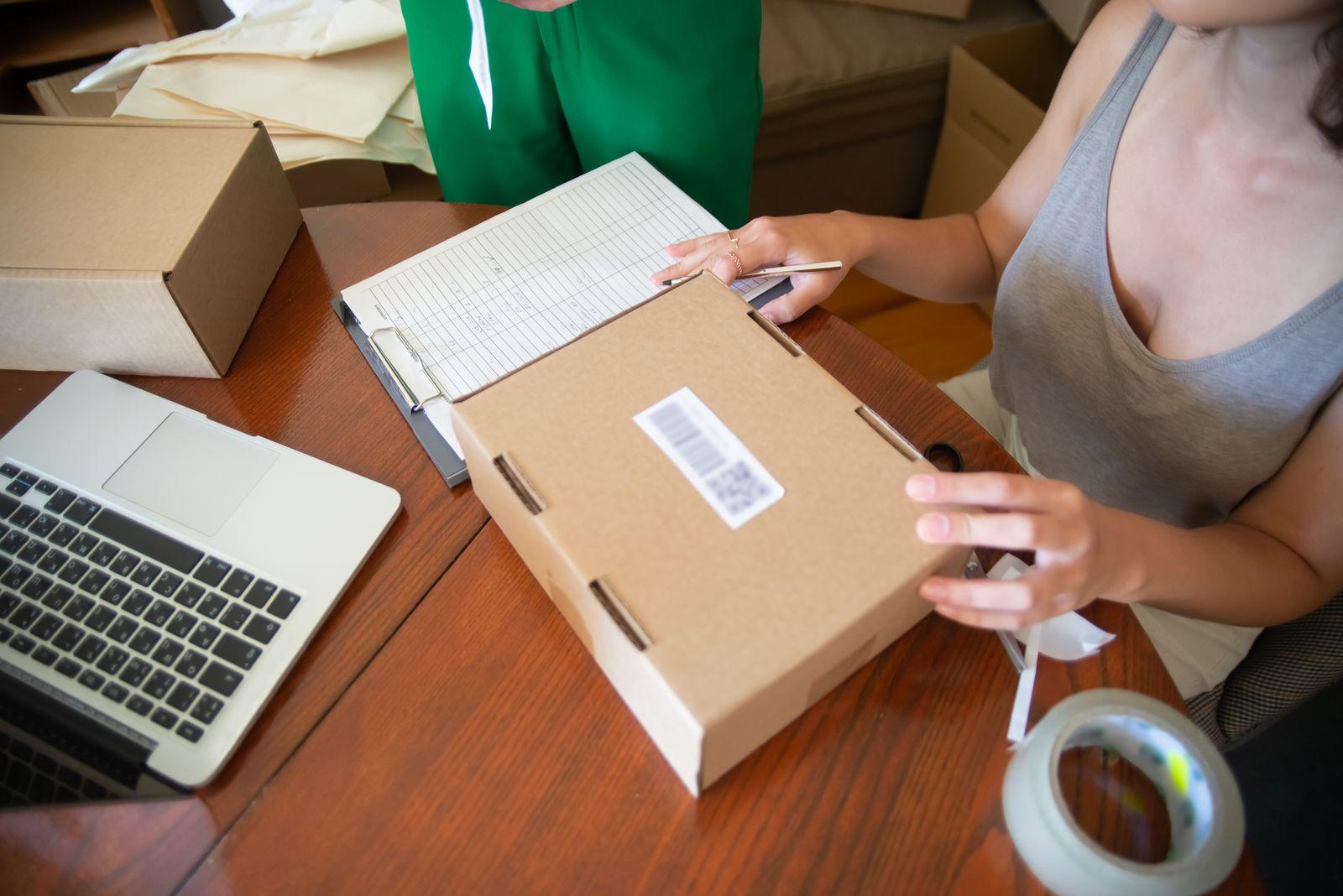
Cover photo: Kampus Production / Pexels, used under the Pexels License. The photograph illustrates order packing and does not depict a Hydra merchant.