Short answer: To calculate a dish's food cost percentage, divide the ingredient cost of one standard portion by the sale revenue for that portion on a consistent VAT basis, then multiply by 100. For a VAT-registered restaurant, a chicken wrap with R30 of ingredients sold for R115 including 15% VAT has R100 of sales revenue before VAT, so its food cost is 30%. To check what the whole kitchen actually used in a period, calculate opening food stock + food purchases − closing food stock, then divide by food sales for the same period. The two figures answer different questions, and both matter when a South African restaurant is pricing its menu.
Method, SARS VAT rate and vendor guidance checked on 28 October 2026. All ingredient prices below are illustrative assumptions, not current supplier quotes or recommended selling prices.
Recipe food cost versus actual food cost
Recipe food cost tells you what a dish should cost when staff follow a specified recipe and portion. Actual food cost tells you what left your food inventory during a week or month. The Auguste Escoffier School of Culinary Arts describes both the per-item ingredient check and the opening-stock-plus-purchases-minus-closing-stock method. Use the recipe result to make menu decisions; use actual cost to investigate how purchasing, prep, waste and sales worked in practice.
For the comparisons to mean anything, define your categories first. Keep food stock and food sales together; do not divide kitchen food costs by sales that also include drinks or merchandise. Decide how your reports handle staff meals, complimentary dishes, transfers to the bar and spoiled food, then use the same rules each period. A percentage with mismatched categories can look reassuring while the kitchen is losing money.
Cost one portion from a real recipe
Suppose a Durban café sells a chicken wrap. It records the quantity purchased or consumed for one sale, using supplier costs after any input VAT it can legitimately recover. The chicken portion starts as 180 g raw; the recipe does not pretend the cooked serving weighs 180 g. The figures are deliberately simple so you can replace them with your own invoice and prep data.
| Ingredient | Quantity for one wrap | Cost basis | Cost per wrap |
|---|---|---|---|
| Raw chicken | 180 g | R95/kg | R17.10 |
| Tortilla | 1 | R5 each | R5.00 |
| Lettuce and tomato | Measured portion | Recipe cost | R4.50 |
| Sauce | Measured portion | Recipe cost | R2.50 |
| Oil and seasoning | Measured portion | Recipe cost | R0.90 |
| Total ingredients | R30.00 |
The chicken calculation is 0.18 kg × R95 = R17.10. For a bulk sauce or spice, cost the amount used rather than charging the whole container to one wrap. If trimming, peeling or cooking changes how much you can serve, weigh a typical batch and calculate the cost per usable portion. Count garnish, oil and standard sauces: small omissions across hundreds of plates are still real costs.
The café is VAT registered and sells this standard-rated prepared dish for R115 including VAT. SARS lists the standard rate as 15%, so revenue before VAT is R115 ÷ 1.15 = R100. The recipe food cost percentage is R30 ÷ R100 × 100 = 30%. The remaining R70 before VAT is not net profit: wages, rent, utilities, card fees, packaging and other costs still have to be paid.
Use a consistent VAT basis. A registered vendor should compare sales excluding output VAT with ingredient costs excluding any input VAT it may claim. Some food purchases are zero-rated, and not every invoice has recoverable VAT; use the amounts appropriate to each item. A café that is not VAT registered should use the ingredient costs it actually bears and its actual selling price, without adding a VAT line. SARS's small-business guide explains both VAT-inclusive customer prices for vendors and the existence of zero-rated foodstuffs.
What happens when an ingredient price rises?
If the chicken supplier's price moves from the illustrative R95/kg to R110/kg, the 180 g portion costs R19.80 instead of R17.10. The wrap's recipe cost becomes R32.70. At the same R100 selling price before VAT, food cost rises from 30% to 32.7%. That is R2.70 less per wrap to cover the other expenses and profit, before any other change.
To return the dish to a 30% ingredient-cost percentage by price alone, the arithmetic is R32.70 ÷ 0.30 = R109 before VAT, or R125.35 including 15% VAT. That is a calculation, not an instruction to put R125.35 on the menu. Check the price customers will accept, the portions and quality you promised, and what alternative suppliers can reliably deliver. If you round to a practical menu price, recalculate the percentage at that exact price.
Avoid quietly shrinking a regular customer's portion to protect the number. A dish that looks good in a spreadsheet but disappoints returning guests can damage repeat business. If you change the recipe or size, update the menu description and brief the kitchen and front-of-house team together.
Calculate what the kitchen used during the month
For a monthly actual-food-cost check, take stock at the start and end of the same period and use purchases received during it. Here is an example, with all values on a consistent VAT and inventory basis:
| Monthly food-stock movement | Rand |
|---|---|
| Opening food stock | R18,000 |
| Add food purchases received | R62,000 |
| Less closing food stock | (R16,000) |
| Food used, before any necessary adjustments | R64,000 |
If food sales excluding VAT for that same month are R200,000, the unadjusted actual food cost percentage is R64,000 ÷ R200,000 × 100 = 32%. Your own accounts may need adjustments for supplier returns, kitchen-to-bar transfers, staff meals or other non-sale use. Record them visibly; do not make them disappear to improve the percentage. The Escoffier calculation gives the basic stock formula, while our small-business stock-take guide explains how to make the counts repeatable.
An actual figure above the recipe plan is a question to investigate, not proof of theft or poor cooking. Check whether supplier prices changed, portions drifted, produce was discarded, staff meals were recorded, stock was counted consistently, or a greater share of sales came from higher-cost dishes. A recipe estimate is only comparable with actual cost if it is weighted by the number of each dish sold and the accounting categories match.
Is a lower food cost percentage always better?
No. Food cost is one part of the decision. A higher-cost special can still make a useful rand contribution and bring guests back, while a low-cost dish can sell slowly or require expensive prep time. Look at price, ingredient cost in rand, sales volume, labour demands, waste and guest response together. Never label a dish “profitable” from its ingredient percentage alone.
For example, the original R115 wrap yields R100 before VAT and uses R30 in ingredients: R70 before other costs. If a takeaway order adds R6 packaging and R3 payment-related cost, its contribution after those three variable items is R61, before wages and fixed overhead. A delivery marketplace may have another charge; use the actual contract rather than a guessed commission. Our markup-versus-margin guide covers those wider price and contribution calculations. This article's food-cost figure deliberately stays focused on ingredients.
A repeatable weekly routine for a small restaurant
- Pick your ten best-selling dishes. Write a standard recipe with raw or usable quantities, portion size and yield.
- Update ingredient unit costs from the latest supplier invoices, on a consistent VAT basis. Put the invoice date next to each price.
- Calculate ingredient cost ÷ net selling price for each dish, and record the rand left after ingredients too.
- Use your POS sales counts to see which dishes drive the total. Do not average ten percentages as though every dish sold equally often.
- Count food stock on the same day each week or month; reconcile purchases, transfers, waste and actual food sales.
- Investigate a change before changing the menu: check price, quantity, yield, recipe compliance and guest feedback. Test one improvement, then measure again.
If the records are new, start with one recipe and one clean stock period. A precise small sample is more useful than a “30% target” copied from a different restaurant. The aim is a dish customers want to order again at a price that can sustain the service you promised.
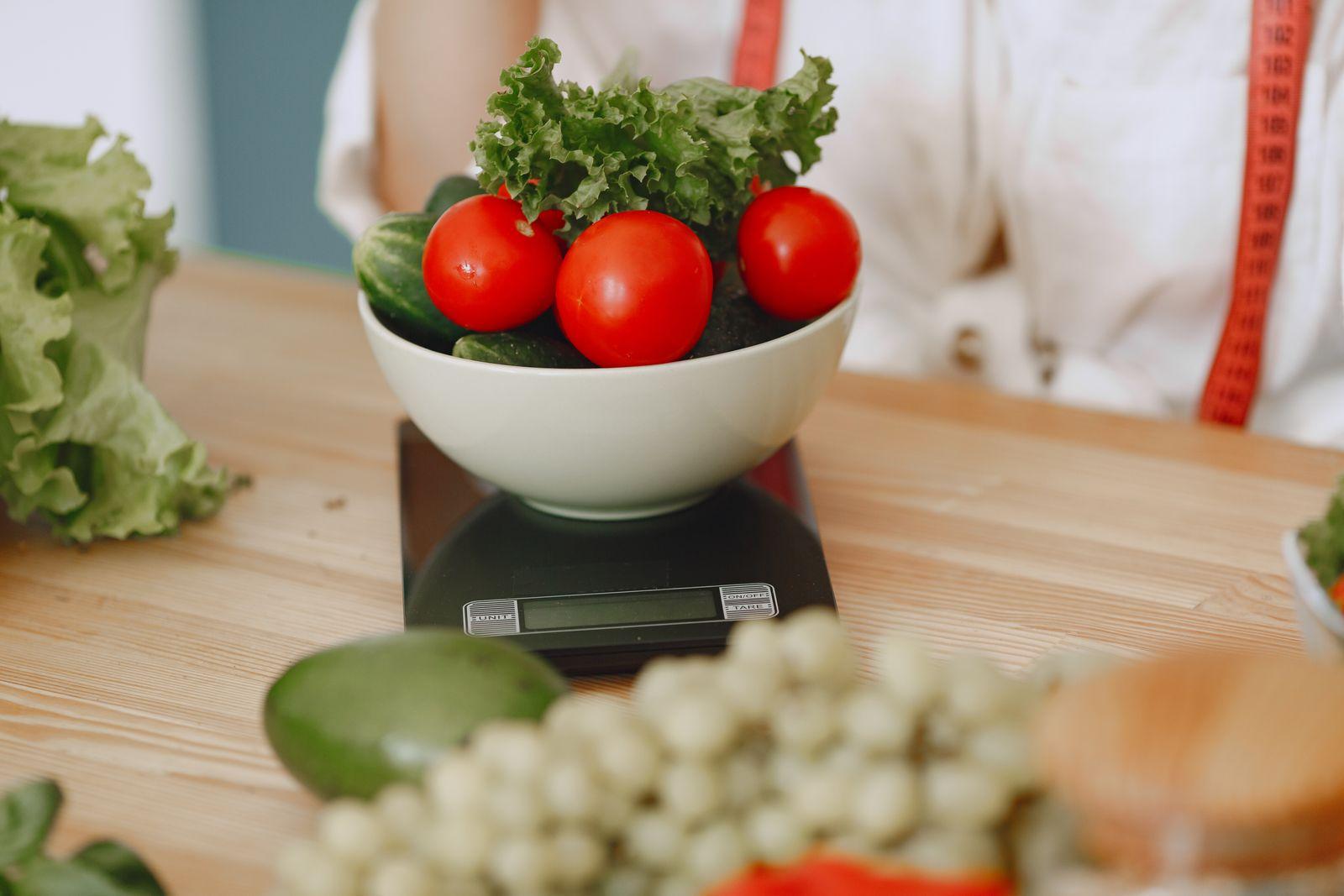
Cover photo: Gustavo Fring / Pexels, used under the Pexels License. The photograph illustrates portion measurement; it does not depict a Hydra merchant or the example café.