Customer surveys for South African small businesses: questions, timing and what to do with answers
Hydra
Short answer: A small South African business should run a customer survey when it has a specific decision to make and a person ready to act on the answers. Ask one question about the experience, one about what to improve, and one optional question about follow-up. Send it soon after the visit or delivery, keep it short enough to finish on a phone, and review the replies every week. A survey does not improve retention by itself; fixing the problems it reveals can give customers a reason to return.
Practical guidance and linked policies checked on 15 October 2026. This is an operating guide, not a claim that a particular response rate or retention gain is guaranteed.
When is a survey worth sending?
Start with a decision, not a questionnaire. A Durban takeaway might need to know why collection orders run late on Friday nights. A Pretoria salon might want to learn whether booking times suit returning clients. A Cape Town retailer might be investigating confusing exchanges. Each question should lead to a possible change in staffing, instructions or service.
Use a private survey for details a public review is unlikely to provide: which step failed, whether a problem was resolved, or what would make the next visit easier. A Google review serves a different purpose: it helps other people assess a business. Hydra’s guide to asking for Google reviews covers that public request process.
Before launching, decide who will read replies, how quickly an urgent complaint will reach a manager, and when you will tell staff what changed. If nobody owns those steps, collecting more feedback adds work without helping a customer.
What are the best three survey questions for a small business?
Use this template after a completed purchase or service:
- “How easy was it to [specific task] today?” Offer the same five choices each time: very easy, easy, neither, difficult, very difficult. Replace the task with “collect your order”, “book your appointment” or “find what you needed”.
- “What should we keep or change about that experience?” Make this optional free text. The wording invites praise and criticism without suggesting the answer.
- “Would you like us to contact you about your answer?” Offer yes or no. If yes, ask for a preferred contact method or use the contact details the customer has agreed you may use for service follow-up. Keep this separate from consent to receive promotions.
The first answer shows whether the particular task is becoming easier over time. The second tells you why. The third gives you a way to resolve an individual problem. Avoid a vague “Rate us from 1 to 10” if the decision is really about a late collection queue. Avoid asking for name, birth date and postcode when you only need to fix that queue.
Test the survey yourself on an inexpensive phone and mobile connection. A customer should understand the purpose, complete it in about a minute and be able to skip the written answer. If your form asks for more, remove a question before adding another.
When and where should you ask?
Choose a moment when the customer has experienced the thing you are measuring. A receipt or collection message can link to a survey about checkout or handover. A salon can ask after the appointment. A gym should not ask after every workout; a short check-in after a member’s first few weeks may reveal an onboarding issue. Try one channel at a time so you can tell what is working.
Here is a neutral invitation a retailer can adapt: “Thanks for collecting your order today. We’re checking whether collection is easy. This three-question survey takes about a minute: [link]. Your answers go to our team; replying is optional.” If you are gathering identifiable details, link your privacy notice from the form. Do not bury an advertising offer in what looks like a service survey.
Keep the Google review invitation separate and available to genuine customers regardless of their survey answer. Sending happy respondents to Google while keeping unhappy ones in a private form is selective solicitation. Google’s Maps policy prohibits discouraging negative reviews or selectively asking for positive ones.
How do you read the results without fooling yourself?
Keep three counts: customers invited, surveys completed and recurring problems mentioned. Response rate = completed surveys ÷ invitations sent. If a shop sends 120 invitations and gets 18 completed surveys, the response rate is 15%. If five of those 18 mention a slow queue, that is a signal to inspect the queue. It is not evidence that five in every 18 shoppers had the problem: the people who chose to answer may differ from those who did not.
Read comments alongside operational facts. For the queue example, compare timestamps, shift rosters and collection volume before deciding what to change. Keep the same core question and answer choices for a few weeks so results are comparable. If you change the question from “collection” to “overall experience”, start a new series rather than presenting the two scores as a trend.
Do not hide a problem in an average. A café may receive many “easy” answers while several customers describe an allergy-handling mistake. Escalate safety or serious service issues immediately, even if the overall score looks fine. Record the theme, owner, action and date, then check whether the same issue appears after the fix.
What should you do with a negative response?
Treat a request for contact as a service case, not a marketing lead. A useful sequence is: acknowledge the specific issue, check the transaction with the team, explain the next step, and close the loop when it is done. If the customer did not ask to be contacted, use their feedback to improve the process without turning an anonymous response into a personal outreach campaign.
For example, if several salon clients say the booking confirmation omits parking directions, update the confirmation message and tell the reception team. If one customer reports being charged twice, have a manager investigate that individual case promptly. The survey’s value is the change made, not the number of responses collected.
At a weekly 15-minute review, ask:
- Which issue appeared more than once?
- Which response needs a person to reply today?
- What one process can we change this week?
- How will we know next week whether the change helped?
Share a brief “you told us, we changed” note when a change is real and appropriate to disclose. Do not name a customer or repeat identifiable comments without permission.
How does POPIA affect a customer survey?
The Protection of Personal Information Act (POPIA) applies when you process personal information. Its sections 10, 13, 14, 18 and 19 address collecting only relevant information, specifying the purpose, retention, telling people about collection and reasonable security safeguards. In practice, state who runs the survey and why, make the purpose clear, restrict staff access, and remove or de-identify identifiable answers when you no longer have a lawful reason to keep them. A survey provider processing responses on your behalf also needs appropriate contractual safeguards under section 21.
A service survey is not automatically the same thing as a promotion. But if you use the survey message or answers for electronic direct marketing, section 69 of POPIA has specific consent or qualifying existing-customer conditions, plus an opportunity to object. Do not treat “please contact me about my complaint” as permission to send offers. Keep the service follow-up and marketing preferences separate, and check your actual message and data use against the Act.
A simple four-week launch plan
Week 1: Pick one journey and one decision. Write the three questions, name the person who will review replies, and test the form on a phone.
Week 2: Invite a consistent set of eligible customers after the experience. Log the number invited so you can calculate response rate. Keep the invitation optional and explain its purpose.
Week 3: Group comments by theme, contact only those who asked for service follow-up, and fix one recurring friction point.
Week 4: Ask the same core question again. Compare the new responses with the earlier ones, check operational evidence, and document what changed. If replies are sparse, use them as individual clues rather than a market-wide verdict.
A good survey is a small listening system. Its success is visible in a clearer collection process, a resolved complaint or a better next visit. If your business also wants to recognise repeat activity and configure rewards, Hydra can sit alongside that service work; ask how the two workflows would fit your team before adding another tool.
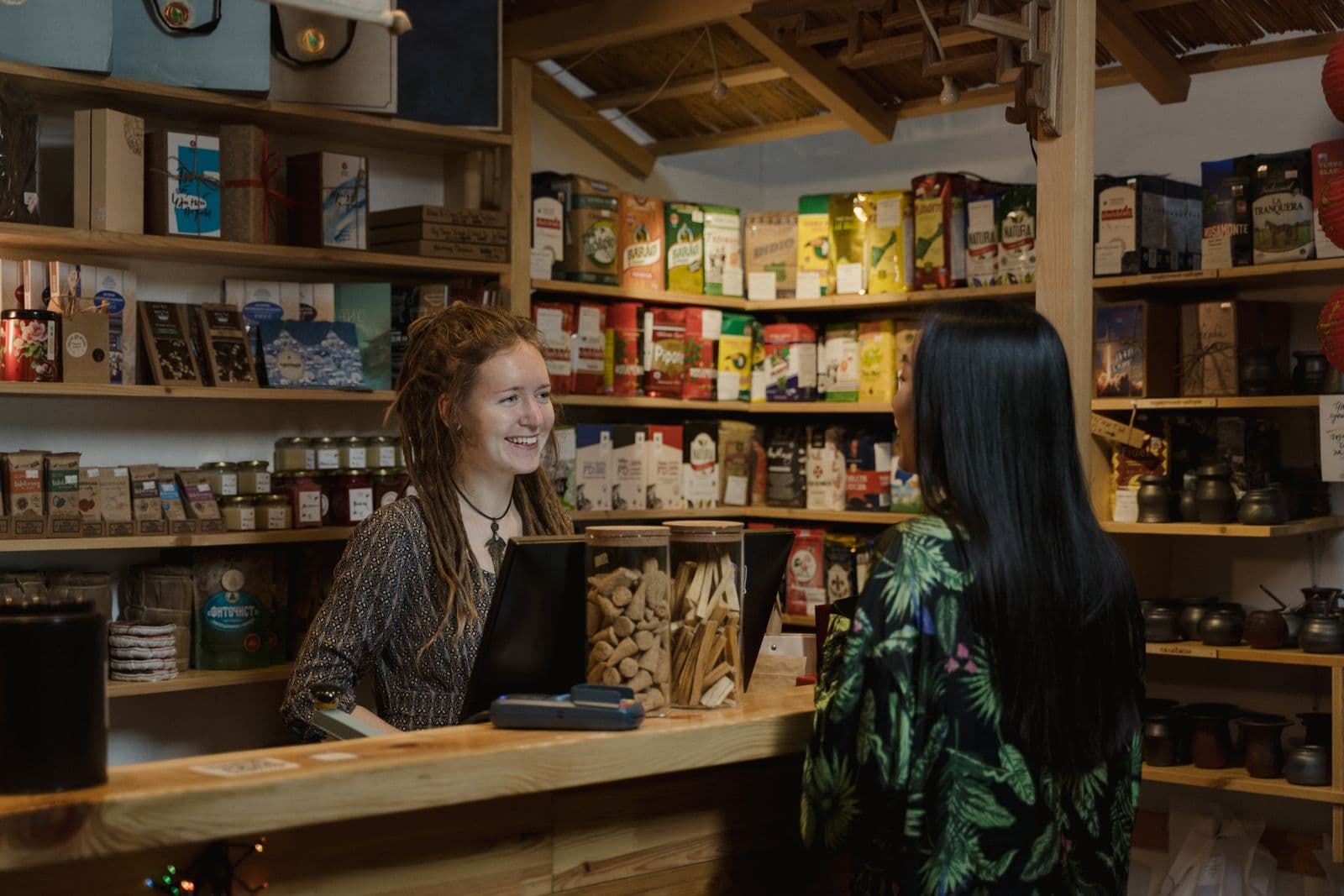
Cover photo: Tima Miroshnichenko / Pexels, used under the Pexels License. The people pictured are illustrative and do not endorse Hydra.